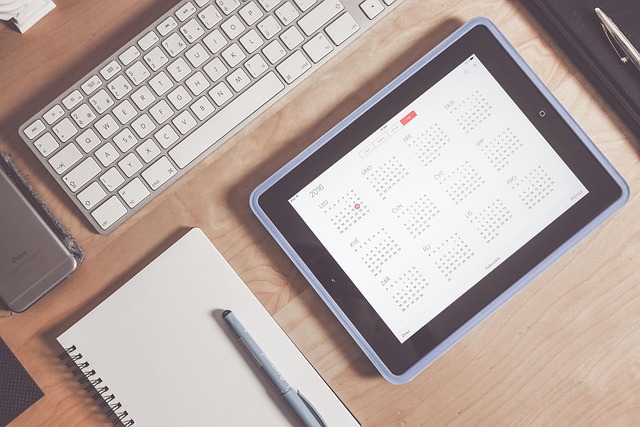
A comprehensive educational resource covering common time management frameworks, daily planning habits, and scheduling techniques. This content is designed for beginners and presents information in a clear, neutral manner without making productivity promises.
Time organization is the practice of planning and controlling how you spend the hours in your day. It involves making deliberate choices about what to do, when to do it, and how long to spend on each activity. While the term "time management" is commonly used, many educators prefer "time organization" because it reflects the idea that time itself cannot be managed, but your relationship with it can be structured more intentionally.
At its core, time organization is about awareness. Before applying any specific method or tool, it helps to understand how your time is currently being spent. Many people discover, when they track their hours for a week, that there are significant differences between how they think they spend their time and how they actually spend it. This awareness creates a foundation for making informed adjustments.
The approaches described on this page represent well-known frameworks that have been written about extensively in educational and professional development literature. Each method has strengths and limitations, and no single approach works equally well for everyone. The goal of this resource is to explain these concepts clearly so readers can explore what fits their circumstances.

People explore time organization for a variety of practical reasons. Understanding why this topic draws interest can help frame the methods and tools described throughout this page.
One of the most common motivations for learning about time organization is the desire to complete regular tasks more consistently. When daily responsibilities pile up, having a system for listing, ordering, and working through them reduces the chance of important items falling through the cracks. A structured approach helps people stay on top of both professional obligations and personal errands without relying solely on memory.
Decision fatigue refers to the declining quality of decisions made after a long period of continuous decision-making. By planning your day in advance, you reduce the number of in-the-moment decisions required. Instead of repeatedly asking yourself what to do next, you follow a schedule or prioritized list that you set up earlier when your energy and focus were stronger. This concept is frequently discussed in cognitive psychology research.
Many adults juggle work, family, education, health, and social commitments simultaneously. Without some form of planning, these areas can compete for attention in a disorganized way. Time organization provides a framework for allocating time to each area deliberately, rather than letting the loudest demand take priority by default. This does not eliminate conflict between responsibilities, but it makes trade-offs more visible and intentional.
Goals that require sustained effort over weeks or months, such as learning a new skill, preparing for a certification, or building a savings plan, depend on consistent time allocation. Without scheduling regular sessions dedicated to these goals, daily urgencies tend to crowd them out. Time organization helps connect long-term aspirations to specific daily or weekly actions, making gradual progress more likely.
Tracking how time is spent provides data that many people find illuminating. Common patterns emerge, such as spending more time on email than expected, or underestimating how long routine tasks actually take. This visibility allows for more realistic planning and helps people identify where their time aligns, or does not align, with what they consider most important. Several digital tools exist to support this kind of time tracking.
Routines and time organization are closely connected. When specific activities happen at roughly the same time each day, they require less deliberate thought and become part of an automatic rhythm. Many people who study time organization are interested in establishing morning routines, work routines, or evening wind-down sequences. Consistency in these areas often reduces friction in transitioning between different types of activities.
The following methods are widely referenced in personal development and productivity literature. Each takes a slightly different approach to organizing tasks and time. They are presented here as educational overviews, not endorsements of one method over another.
Named after Dwight D. Eisenhower, the 34th president of the United States, this framework categorizes tasks along two dimensions: urgency and importance. The result is a two-by-two grid with four quadrants, each suggesting a different type of action. The matrix is popular because of its simplicity and because it forces a distinction between what feels urgent and what is genuinely important.
Quadrant one contains tasks that are both urgent and important, such as a deadline due today or an unexpected emergency. These require immediate attention. Quadrant two holds tasks that are important but not urgent, like long-term planning, skill development, or relationship building. Many time management educators suggest that spending more time in quadrant two leads to fewer quadrant-one crises over time.
Quadrant three covers tasks that are urgent but not important, such as some phone calls or certain emails that demand a response but do not contribute significantly to your goals. These may be candidates for delegation. Quadrant four includes tasks that are neither urgent nor important, which often represent distractions or time-fillers. Identifying these can help people reclaim time for higher-priority activities.
Urgent and important. Crises, deadlines, pressing problems that need immediate action.
Important but not urgent. Planning, learning, prevention, relationship building.
Urgent but not important. Interruptions, some emails, certain meetings that can be handled by others.
Neither urgent nor important. Time-wasters, excessive scrolling, busywork with low value.
This is a simplified example. Actual schedules vary based on individual needs.
Time blocking involves dividing your day into specific blocks, each dedicated to a particular task or category of work. Rather than keeping a fluid to-do list and completing items in whatever order feels right, time blocking assigns each activity a defined window. The technique is based on the idea that focused, uninterrupted work during a set period produces better results than constantly switching between different types of tasks.
Practitioners typically start by identifying their most important tasks for the day and assigning them to the hours when they tend to feel most alert and focused. Lower-energy tasks, such as answering routine emails or organizing files, are placed in time slots when concentration naturally dips, often in the early afternoon for many people. Breaks are built into the schedule deliberately rather than taken randomly.
One common challenge with time blocking is dealing with unexpected interruptions. Some practitioners address this by including a "buffer block" in their day, a short window of unscheduled time that can absorb surprises without derailing the rest of the plan. Others accept that blocks will shift and treat the schedule as a flexible guide rather than a rigid timetable.
Developed by Francesco Cirillo in the late 1980s, the Pomodoro Technique structures work into intervals of approximately 25 minutes, called "pomodoros," separated by short breaks of about five minutes. After completing four consecutive pomodoros, a longer break of 15 to 30 minutes is taken. The name comes from the Italian word for tomato, inspired by the tomato-shaped kitchen timer Cirillo used as a university student.
The technique addresses a common challenge: maintaining concentration over extended periods. By working in short, defined intervals, the method creates a sense of urgency within each pomodoro while ensuring regular rest. Some users find that knowing a break is only minutes away makes it easier to resist distractions during the work interval. The short breaks also provide a natural checkpoint to assess progress and decide what to focus on next.
The Pomodoro Technique is particularly popular for tasks that require sustained mental effort, such as writing, studying, or coding. It is less suited to work that involves frequent collaboration or tasks that cannot easily be paused and resumed. Many digital timer apps have been built specifically to support this method, offering customizable interval lengths and session tracking.
Getting Things Done, commonly referred to as GTD, is a task management framework developed by David Allen and published in a book of the same name. The central idea is that productivity improves when all tasks, ideas, and commitments are captured outside of your head and organized into a trusted system. By externalizing what needs to be done, you free up mental energy for actually doing it.
The GTD process has five stages: capture, clarify, organize, reflect, and engage. During the capture phase, you collect everything that has your attention, whether large or small, into an inbox. In the clarify phase, you process each item by deciding what it is and what action, if any, is needed. Items are then organized into appropriate lists: next actions, projects, waiting for, or someday-maybe. Regular reflection, typically a weekly review, keeps the system current.
GTD is more comprehensive than many other time management methods and can take time to learn and implement fully. Some people adopt the entire system, while others borrow specific elements, such as the weekly review or the two-minute rule (if a task takes less than two minutes, do it immediately rather than adding it to a list). The framework is widely used in both personal and professional contexts.
Daily planning is one of the most accessible time organization habits. It involves taking a few minutes, usually at the start or end of the day, to decide what you intend to accomplish and in what order. The following points describe common elements of a daily planning session.
Begin by looking at what carried over from the previous day or what already exists on your task list. This creates a realistic picture of your current commitments. If tasks have been sitting on the list for multiple days, it may be worth asking whether they are still relevant or whether they need to be broken into smaller steps. A quick scan of yesterday's plan helps identify patterns in what gets done and what gets postponed.
Many planning guides suggest selecting between one and three tasks that represent the most meaningful work for the day. These are not necessarily the most enjoyable tasks or the easiest ones; they are the items that would make the day feel productive if completed. Keeping this number small prevents the sense of overwhelm that can come from staring at a long, undifferentiated list. Everything else becomes secondary to these core priorities.
Estimating how long each task will take is a skill that improves with practice. Many people underestimate task duration, a cognitive bias researchers call the "planning fallacy." Adding a buffer of 10 to 25 percent to your initial estimate can help create more realistic schedules. Over time, tracking how long tasks actually take compared to how long you thought they would take provides useful calibration data for future planning sessions.
If you use time blocking, this step involves placing each task into a specific window on your calendar or planner. If you prefer a simpler approach, you might just order your list from most to least important. The key idea is creating a sequence so that when one task finishes, you know exactly what comes next. This reduces the pauses between activities where distraction can creep in.
A plan that fills every minute with productive work is unlikely to be sustainable. Including short breaks between blocks of focused work gives your mind time to reset. Transition time between activities, such as the few minutes it takes to close one application and open another or to walk between rooms, should also be accounted for. Plans that respect the need for rest tend to be followed more consistently than those that do not.
Spending a few minutes at the end of the day reviewing what was accomplished, what was not, and why can provide valuable information for the next day's plan. This is not meant to be a self-critical exercise but rather a factual assessment. Did unexpected tasks arise? Were time estimates accurate? What adjustments would help tomorrow run more smoothly? This reflective step closes the loop and feeds into the next planning session.
While daily planning focuses on the immediate tasks ahead, the weekly review provides a broader perspective. It is a dedicated time, usually 30 to 60 minutes at the end of each week, to step back and look at the bigger picture. The weekly review is a core component of the GTD method but is widely used independently of any specific framework.
During a weekly review, you typically examine what was accomplished during the past week, what tasks or goals were left unfinished, and what commitments exist for the week ahead. This is also a good time to check whether your daily activities are aligned with your broader goals. For instance, if learning a new language is a priority but no study sessions happened in the past week, the weekly review makes that gap visible.
The review also serves a maintenance function. Lists can become cluttered with outdated items; projects may need to be redefined; and priorities may have shifted due to new information or circumstances. Regularly cleaning up and updating your planning system keeps it useful and trustworthy. Many people who adopt the weekly review habit report that it becomes one of the most valuable parts of their time organization practice.
Both analog and digital tools can support the methods described above. This section describes common categories of tools that people use for time organization. No specific product recommendations are made; the focus is on explaining what each type of tool does.
Physical notebooks, bullet journals, and dated planners offer a tactile, distraction-free way to plan. Many users report that the act of writing by hand helps them remember tasks better. Paper planners range from structured pre-printed formats to blank notebooks that allow complete customization.
Calendar applications provide scheduling with reminders, recurring events, and cross-device syncing. They support time blocking by allowing colour-coded blocks for different types of activities. Sharing features make them useful for coordinating with colleagues, family members, or study groups.
These applications allow you to create, organize, prioritize, and check off tasks. Features typically include due dates, labels, subtasks, and project groupings. Some apps integrate with calendars and email, providing a centralized view of what needs to be done and when.
Timer apps are designed to support techniques like the Pomodoro method. They count down work intervals and signal when breaks should begin. Some track the number of completed intervals over time, providing a record of focused work sessions that can be reviewed during weekly planning.
No planning system eliminates all difficulties. Understanding common obstacles can help set realistic expectations and inform how you approach time organization in your own life.
Filling every available hour with planned activities leaves no room for the unexpected. When the plan inevitably shifts, over-schedulers may feel frustrated or defeated. A more sustainable approach includes buffer time and accepts that some flexibility is necessary. Leaving 15 to 20 percent of your day unscheduled is a commonly suggested practice among time management educators.
Trying a new system every week prevents any single approach from being fairly evaluated. Most time management methods need at least two to four weeks of consistent use before their effects become apparent. The adjustment period itself requires energy, and constantly restarting can create the illusion that nothing works when the real issue is insufficient time for adaptation.
Spending excessive time crafting the perfect plan, choosing the ideal planner, or colour-coding every category can become a form of productive procrastination. The planning process itself starts consuming time that could be spent on actual tasks. Simple systems that take a few minutes to set up and maintain tend to be more effective than elaborate ones that demand constant upkeep.
Not all time is within your control. Work meetings, family needs, unexpected events, and external deadlines can disrupt even well-made plans. Recognizing which portions of your day are controllable and which are not helps you focus planning efforts where they can have the most impact. Time organization methods work within the reality of your circumstances, not in isolation from them.
If you are new to time organization, starting with a simple approach is generally more sustainable than adopting a complex system right away. The following suggestions are based on commonly shared advice in personal development resources. They are presented as options to consider, not prescriptions.
Track Your Time for One Week
Before changing anything, observe how you currently spend your time. Note what you do in 30-minute intervals for five to seven days. This baseline data helps you identify where adjustments might be most useful.
Pick One Method and Try It for Three Weeks
Choose one of the methods described on this page and commit to using it consistently for at least three weeks. Give yourself permission to adapt it as needed, but resist switching to a different method before the trial period ends.
Start with a Daily Planning Session
Spending just five to ten minutes each morning writing down your top three tasks for the day is a low-commitment starting point that many people find immediately useful. It requires no special tools beyond a piece of paper or a basic notes app.
Be Patient with the Learning Curve
Any new habit takes time to establish. Initial planning sessions may feel slow or awkward. The process becomes smoother with repetition. Treat the early weeks as practice rather than a test of whether the method works for you.
Time organization connects to many other areas of personal development. Explore these related topics on LearnPath.
Learn about active listening, clear expression, and written communication in everyday contexts.
Read moreUnderstand how habits form, the role of repetition, and how routines support daily structure.
Read moreExplore common digital tools for calendars, note-taking, task management, and cloud storage.
Read moreAll content on this website is provided for general informational and educational purposes only. It does not constitute professional, psychological, financial, medical, or legal advice. Readers should consult qualified professionals for advice specific to their personal circumstances. For full details, please read our Disclaimer page.
If you have questions about the content on this platform or would like to share feedback, we are available during regular business hours. We are located in downtown Toronto and respond to inquiries by email within two business days.